| Bazi fortune calculation |
 |
| "bazi", also known as "four pillars", represent the eight characters of a person's birth year, month, day, and hour using the heavenly stems and earthly branches. The ancients believed that one's fortune, including career, wealth, love, physical health, family relationships, and other aspects of life, could be predicted based on these eight characters. AI large model provides free fortune calculation to help you understand your fortune. Learn more>> |
| Ziwei Doushu fortune calculation |
|
| Ziwei Doushu is one of the important branches of traditional Chinese astrology. It was exclusively used by the royal family in ancient times and is known as the "No.1 Divine Number in the World".
The fundamental method of Zi Wei Dou Shu fortune-telling involves determining the location of a person's life palace based on their birth year, month, day, and hour. Based on this, one's lifelong status, personality, wealth, and fortune are inferred. Subsequently, the palaces of siblings, husband and wife, children, wealth, illness, migration, friends, career, home, fortune, and parents are listed in order to create a Zi Wei Dou Shu horoscope. By observing the combination of star constellations in each palace, one's life trajectory can be deduced. Finally, through the influence of the four transformation stars (transformation of knowledge, transformation of wealth, transformation of power, and transformation of misfortune), one's lifelong fortune and destiny are deduced. The AI large model provides free calculations to help you understand your fortune.
Learn more>> |
| Liuyao fortune calculation |
|
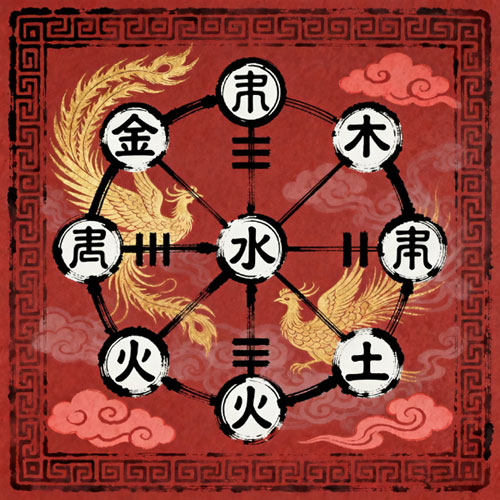
The hexagram and eight trigrams divination is a principle summarized by the ancients based on their observation of the laws governing the operation of nature. It originated from the Nàjiǎ system of Jing Fang in the Western Han Dynasty. Initially, 50 pieces of yarrow grass were used, but by the Song Dynasty, "using coins instead of yarrow grass" had become common practice. The diviner holds three copper coins in their hands, clasps them tightly, and contemplates the matter they wish to divine. They allow the information they wish to divine to permeate the copper coins, then clasps their palms together and shakes them before placing them into the hexagram plate. The hexagram is formed by tossing six times.
After the hexagram is formed, it is paired with hexagram lines, and after the dynamic changes, the development process and outcome of things are judged by matching the six relatives ("I", parents, brothers, wife and wealth, official and ghost, descendants) and six beasts (Green Dragon, White Tiger, Red Bird, Black Tortoise, Dog (Qilin) and Teng Snake) with the day's zodiac signs, mainly relying on the flourishing of the five elements of the divining deity, combined with the hexagram lines' verses from the Book of Changes. The Six Trigrams is one of the most widely spread prediction methods among the people, and its variations include the Plum Blossom Divination Method and the interpretation method of Wen Wang's sixty-four hexagrams. It is much simpler than the authentic interpretation method of the Six Trigrams. Learn more>> |
| Qimen Dunjia fortune calculation |
|
Qimen Dunjia is an ancient Chinese divination system that integrates knowledge from the Book of Changes, astronomy, calendars, Yin and Yang, and the Five Elements. It is known as one of the "Three Ancient Forms" along with Liuren and Taiyi, and ranks first among them. It was hailed by the ancients as "the study of emperors," and was used not only for military strategy and troop deployment but also for predicting auspiciousness or inauspiciousness, and selecting auspicious days and times.
Its name consists of three parts:
Qi: Refers to the "Three Qis" - Yi (Day Qi), Bing (Month Qi), and Ding (Star Qi), symbolizing auspicious qi;
Gate: Refers to the "Eight Gates" - Xiu, Sheng, Shang, Du, Jing, Si, Jing, and Kai, representing human affairs and directions, among which "Kai, Xiu, and Sheng" are the three auspicious gates;
Dùnjiǎ: "Dùn" means "hide", and "jiǎ" is the first of the ten heavenly stems, symbolizing the commander or core force. Because jiǎ is afraid of the metal of gēng, it is "hidden" under the six symbols (wǔ, jǐ, gēng, xīn, rén, guǐ), forming a layout structure.
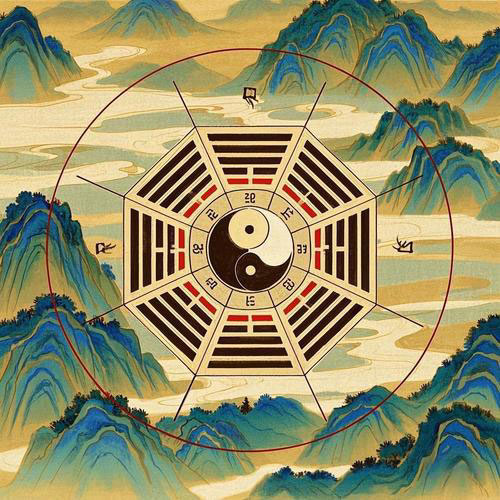
Qi Men Dun Jia involves setting up a layout at a specific time, combining elements such as the heavenly, earthly, human, and divine spheres into a nine-palace and eight-trigrams pattern, to analyze spacetime energy and determine the auspiciousness or inauspiciousness of situations. Traditionally, those proficient in Qi Men Dun Jia are believed to possess the ability to "understand astronomy in the sky, observe geography on the earth, and comprehend human affairs in the midst," thus possessing extremely high strategic and predictive value.
Historically, it is said to have originated from Huangdi, and was passed down through Jiang Taigong, Zhang Liang Learn more>>
|
|